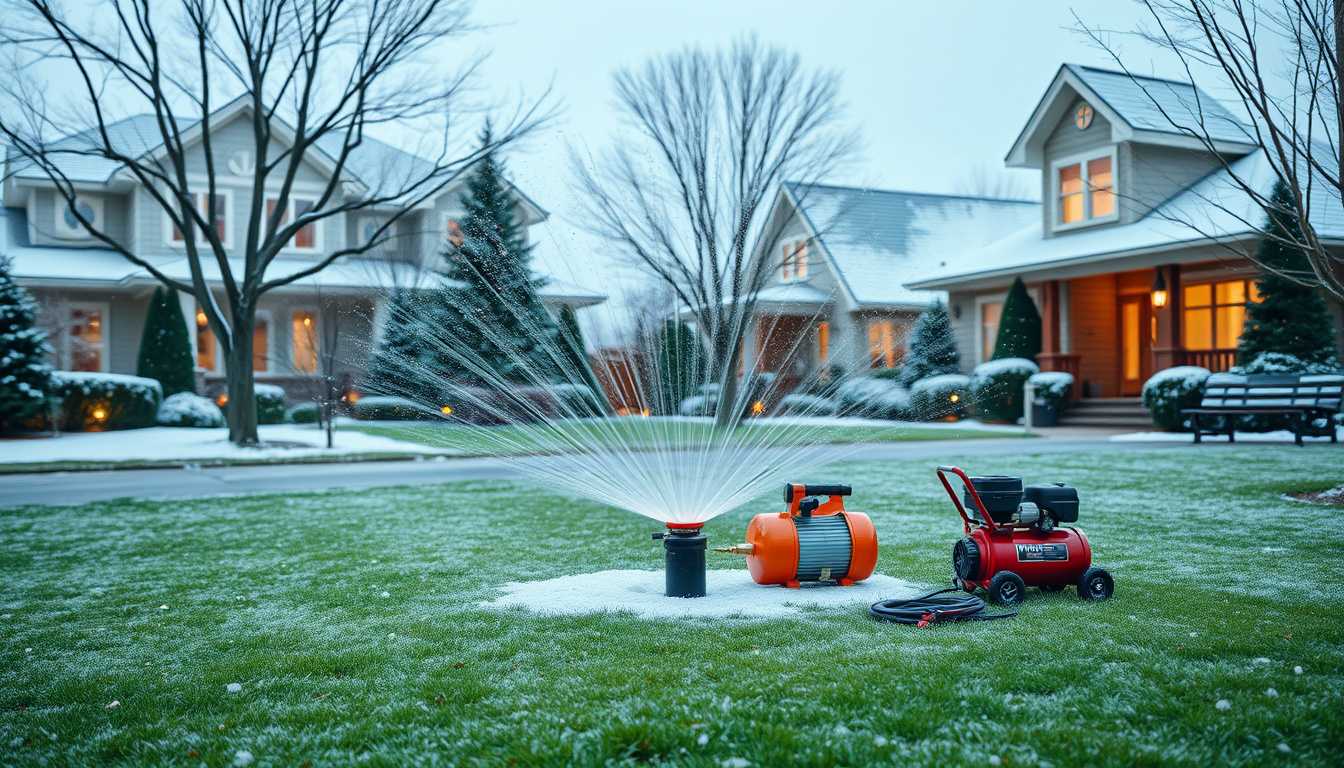
As fall winds down and winter approaches, protecting your lawn’s irrigation system from freezing temperatures becomes a homeowner’s priority. One essential winterizing step is the sprinkler system blowout—a process that removes water from irrigation pipes to prevent freeze damage during cold months. This comprehensive guide explains why blowouts matter, how to perform them safely, and additional winterizing tips to keep your sprinkler system in top shape.
Why Perform a Sprinkler System Blowout?
Sprinkler pipes, valves, and backflow devices contain water that can freeze during low temperatures. When water freezes, it expands—potentially causing cracking or bursting of pipes, which leads to costly repairs. The blowout process forces compressed air into the irrigation lines to expel residual water, reducing freeze risks.
Risks of Not Doing a Blowout
- Cracked or split PVC or polyethylene pipes
- Damaged sprinkler heads and valves
- Broken backflow prevention devices
- Costly repairs or replacements in spring
Performing the blowout before the first hard frost safeguards your system, ensuring it functions smoothly when the growing season returns.
Types of Winterizing Methods
-
Manual Drain Method
Designed for systems equipped with manual drain valves. After shutting off the main water supply, you open these valves to let water drain out naturally. This method may not remove all water, leaving some behind in pipes or valves, so it is only recommended if your system supports it. -
Blowout Method
The most effective method for winterizing sprinkler systems, especially for those without drain valves. It uses an air compressor to push out any remaining water from pipes and sprinkler heads.
Sprinkler System Blowout Step-by-Step Guide

Preparation
- Safety first: Always wear ANSI-approved safety eye protection. Compressed air can cause serious injury or propel debris.
- Equipment: Use an air compressor capable of delivering appropriate airflow (CFM) and regulated pressure—usually not exceeding 50 psi for polyethylene pipes or 80 psi for PVC pipes.
- Locate air connection: This is usually near the backflow prevention device.
Blowout Procedure Using an Automatic Controller
- Shut off the irrigation water supply at the main valve.
- Attach the air compressor hose to the blowout adapter or quick coupler.
- Set the compressor pressure to a safe level (around 50 psi).
- Activate the irrigation zone farthest from the compressor. This allows air to push water out toward the sprinkler heads.
- Open the compressor valve slowly to push air into the system, watching sprinkler heads pop up and expel water.
- Blow each zone for 1–2 minutes maximum. Overblowing can heat and damage pipes or components.
- Cycle through all zones from the farthest to the closest, repeating if necessary until only a fine mist is visible from the heads.
- Once finished, turn off the compressor, release remaining air pressure carefully, disconnect hoses, and turn the controller off.
Blowout Procedure Without Automatic Valves (Manual Activation)
If you don’t have electric valves:
- Close the main water supply.
- Manually open each zone valve to relieve pressure.
- Attach the air compressor to the mainline.
- Activate each zone as described above by opening the manual valve handle.
- Follow the same steps for blowing air and cycling zones.
Additional Winterizing Tips
- Backflow prevention: Close isolation valves on backflow devices and open test cocks to drain trapped water. Ball valves should be cycled open and closed.
- Valve boxes: Insulate valve boxes and backflow preventers to protect from freezing.
- Rain and flow sensors: Remove flow sensors before blowout to prevent damage. Rain sensors with water catchers can be cleared and covered.
- Controller settings: For outdoor controllers, leave power on and set the dial to “OFF” to prevent unwanted activation and condensation buildup.
- Avoid blowing air through pumps or backflow devices. Blowout should be performed downstream of these components.
When to Call a Professional
Winterizing your sprinkler system requires careful handling and proper equipment. Mistakes during the blowout process can cause damage to pipes, valves, and sprinkler heads or pose safety risks. Homeowners without experience or the right tools are encouraged to seek professional irrigation technicians for winterization services.
Summary
Performing a sprinkler system blowout is a critical part of preparing your lawn irrigation for winter. Removing residual water through compressed air prevents freezing damage and costly repairs. By following the safety guidelines and step-by-step instructions—whether manually or using an automatic system—you can protect your investment and keep your lawn healthy year after year. For peace of mind, professional assistance is recommended.
Remember: Early fall is the ideal time to schedule or complete your sprinkler system blowout before temperatures drop below freezing. Protect your irrigation system to enjoy a thriving lawn come spring.
5280 Sprinklers – specializing in irrigation maintenance and repair in and around Denver, Colorado